Air in
Ambient air is drawn through louvered intakes along the container wall.

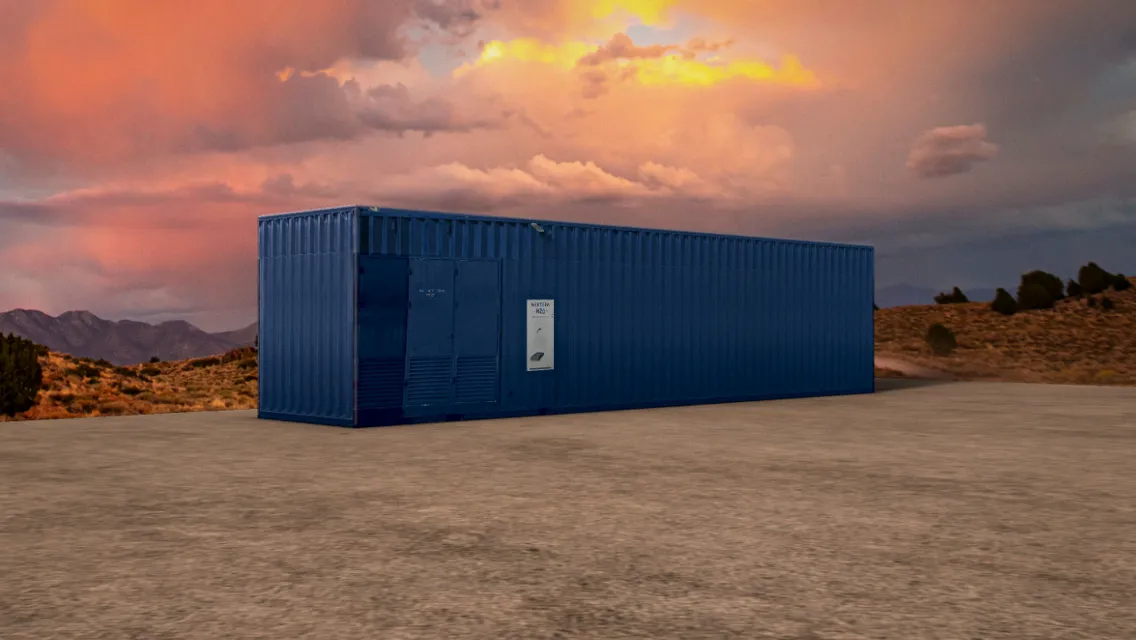
Composite of photos of the actual unit · NextEra livery · stock backdrop
Commercial atmospheric water generation
NextEra H2O deploys containerized systems that capture humidity from the atmosphere and turn it into water on site, for facilities where water availability, resilience and treatment matter most.
The constraint
Data centers, hospitals, universities and commercial buildings depend on municipal allocations that are under strain. Drought, shortage conditions on the Colorado River and aging infrastructure mean supply is no longer something a facility can take for granted, and water availability increasingly decides what gets permitted and built.

The shift in perspective
Don’t move the water. Produce it. On-site atmospheric water becomes a strategic layer of infrastructure where availability, resilience and treatment matter.
How it works
An absorption-desorption process, built for arid air, inside a single container at the point of use.
Ambient air is drawn through louvered intakes along the container wall.
Humidity is captured from the air by absorption, then released and recovered as liquid water.
Recovered water passes through multi-stage filtration inside the unit.
Water is held in an on-site reservoir and delivered where it’s needed.
The platform begins with ambient atmospheric humidity — producing water on site rather than depending entirely on a distant municipal source.
AIRAmbient source
Our units use absorption-desorption AWG technology designed for arid-climate operation. NextEra H2O deploys and services them in the U.S.
Our units produce water at the point of use, with output varying by humidity and site conditions.
For the Stratos anchor opportunity, the target is one integrated structure — sized to customer commitment, not a retail fleet sale.
Scroll to approach the unit
Tap a step to jump to it, or tap a marker to see what that part does.
Shown as a 3D illustration based on the actual unit’s equipment.
How it works
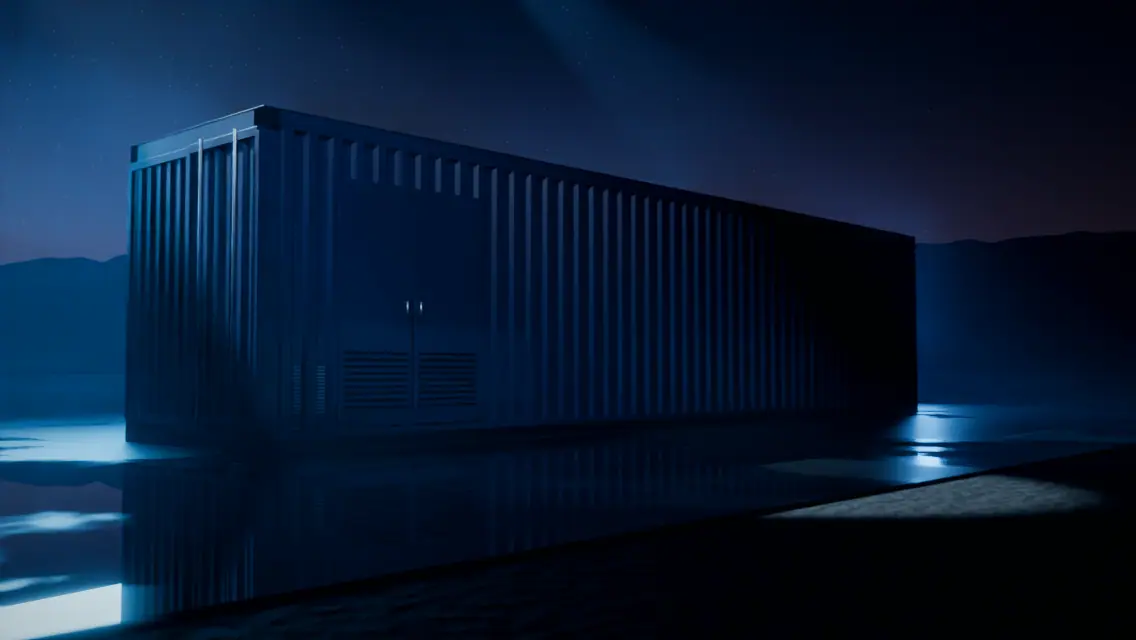
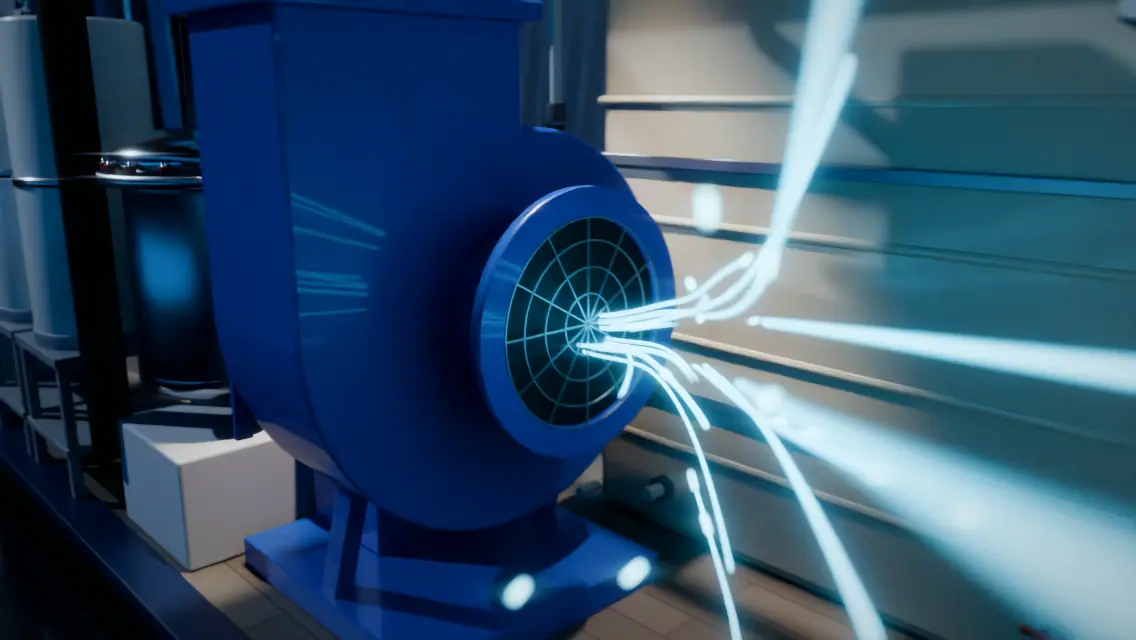
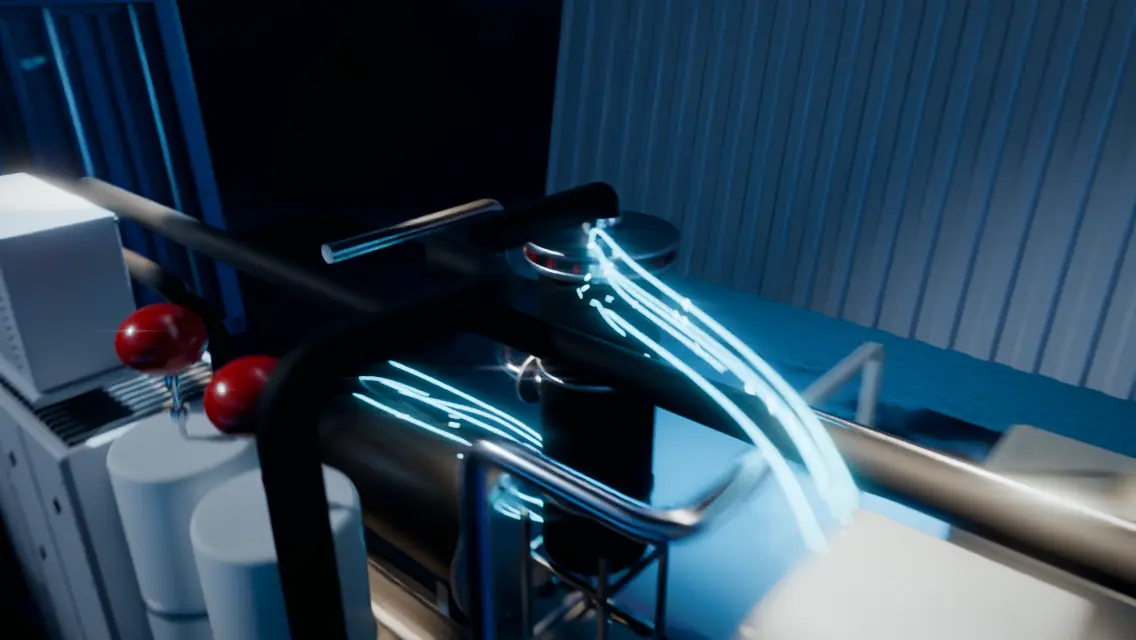
Shown as a 3D illustration based on the actual unit’s equipment.
Why on-site water
The value of atmospheric water isn’t a race against the city rate. It is control over a critical input.
Sectors
Data centers lead. Hospitals, universities, commercial real estate, modular communities and remote sites follow.

Cooling makeup and process water for campuses where water decides where compute gets built.
Explore
A resilient on-site source for central plants that cannot afford an interruption.
Explore
Campus central plants, sustainability goals and a visible living lab.
Explore
Office, multifamily and mixed-use buildings planning for resilience.
Explore
Community-scale supply where a municipal hookup is costly or unavailable.
Explore
Sites where hauled water is the fallback.
ExploreSector images are illustrative and do not show NextEra H2O sites or customers.
The unit
Intake, air handling, absorption, recovery, filtration and controls are housed in a single shipping container, set on a concrete pad at the point of use and connected to on-site storage.
3D illustration based on the actual unit’s equipment · closing view: composite of photos of the actual unit, NextEra livery, stock backdrop

Deployment
Every project starts with the site: its climate, its humidity range, its power and the way water is used today.
Site, climate and demand review.
A formal, project-specific estimate and structure.
Permits by jurisdiction, pad, power and storage tie-in.
Delivery, start-up and water-quality testing.
Ongoing service on every installed unit.
Sustainability
Atmospheric water draws on humidity already in the air rather than on rivers or aquifers. We are equally direct about the other side of the ledger: making water from air takes energy, and we account for it in every project.

The thesis, the business model and the risks, with diligence materials for qualified investors under NDA.
Investor overviewA founder-led company headquartered in Scottsdale, Arizona, focused on deploying and servicing on-site water.
About NextEra H2OStraight answers on how the technology works, where it fits and what it takes to deploy.
Read the FAQ
Next step
Tell us about the facility, the location and how water is used today. We’ll tell you honestly whether atmospheric water fits.